How Double-Sided High-Brightness LCD Displays Improve Window Information Coverage
The Advantage of Double-Sided Screens
In busy commercial streets and large shopping malls, window displays face customers not only directly in front but also from adjacent or opposite directions. Traditional single-sided screens cover only one angle, whereas double-sided high-brightness LCD displays can present content to two directions simultaneously, maximizing information coverage. This design increases visibility and ensures brand messages reach more potential customers.
Double-sided displays are optimized technically: the front screen reaches 2500 nits for excellent visibility in sunlight, while the rear screen reaches 700 nits, making content readable in indoor or shaded conditions. The difference in brightness between front and back is energy-efficient while providing consistent visual performance in different environments.
Attention Capture through Visual Science
Research shows that the human brain prioritizes bright and dynamic elements in its visual field. Double-sided screens leverage high brightness and dynamic content loops to capture attention immediately. In high-traffic streets or mall entrances, this ensures passersby notice the content and are more likely to remember it.
Moreover, double-sided screens allow layered content presentation: the front side can showcase the main visual campaign, while the rear side displays secondary information such as promotions or brand stories. This layered approach improves communication efficiency and enhances the overall impact of window advertising.
Flexible Installation and Environmental Adaptation
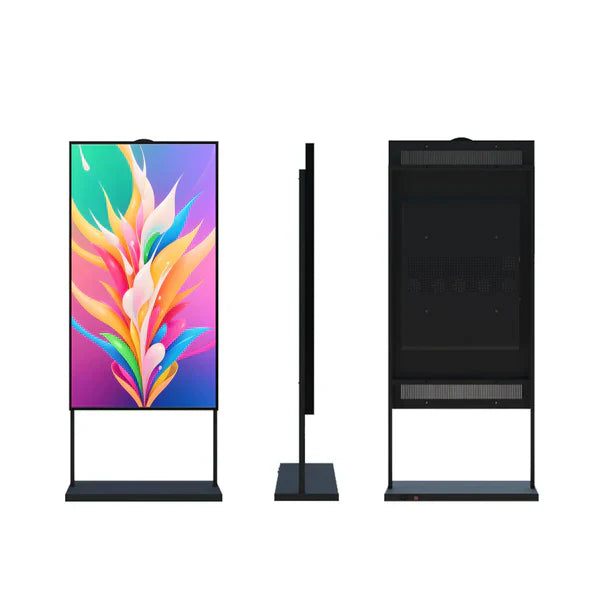
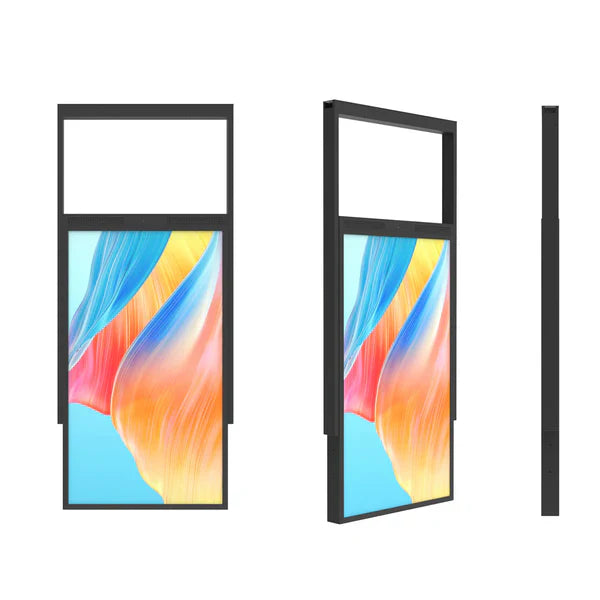
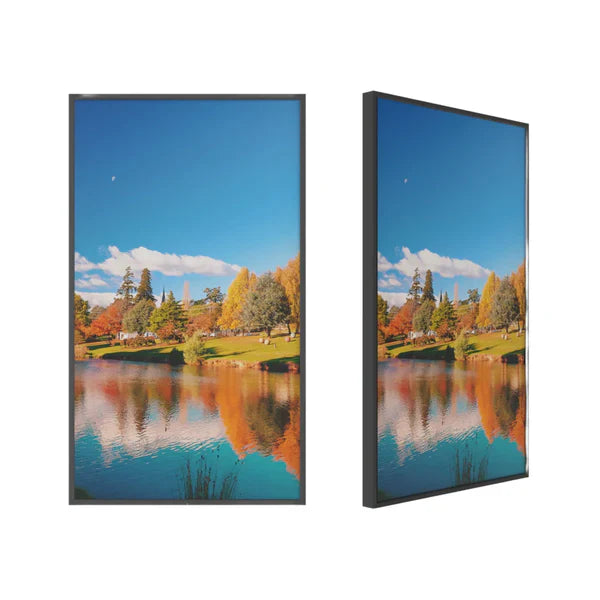
Double-sided high-brightness LCD displays support both suspension and floor stand installation. Suspended installation works well in open or large window areas, improving transparency and visibility, while floor stands suit smaller windows or entrance points. Proper installation and optimal viewing angles ensure content is readable from multiple directions without disrupting window aesthetics.
The slim and lightweight design allows the screen to integrate seamlessly into window displays, complementing decor and merchandising rather than appearing as an intrusive element.
Content Management and Interactive Potential
Double-sided displays feature Android systems and cloud-based content management, supporting remote updates, scheduled playback, and synchronized multi-screen management. USB import simplifies content updates for single-store or small-scale setups.
While primarily used for display purposes, certain models allow touch or interactive extensions for future engagement opportunities. Even without touch functionality, dynamic content design can create synchronized “front-back” visual effects that increase viewer attention and dwell time.
Choosing the Right Screen for Your Window
Based on window size and viewing requirements, retailers can select the following double-sided displays:
These models are optimized for brightness, size, and installation type to meet the needs of various window display scenarios, ensuring brand messaging is visible from multiple angles.
Conclusion: Maximizing Information Coverage
Double-sided high-brightness LCD window displays enhance attention capture and improve information efficiency. Combined with flexible installation, intelligent content management, and proper size selection, they ensure maximum visibility, strong visual impact, and elevated customer experience.