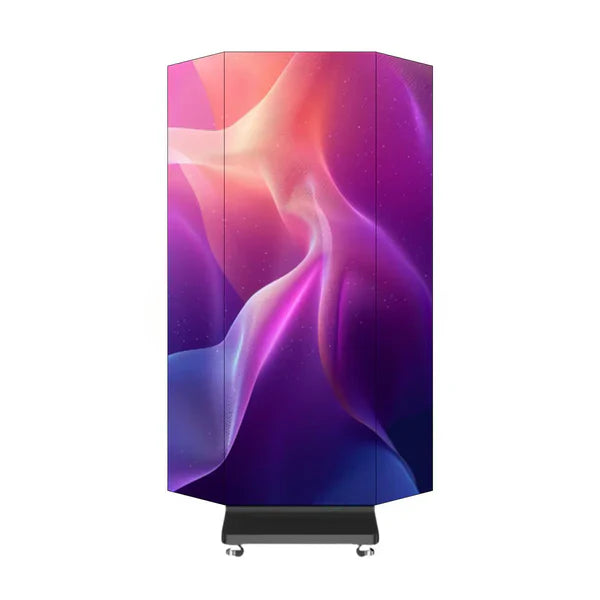
Article: What Is GOB LED Technology and Why Is It Becoming a Standard in Modern LED Poster Displays?
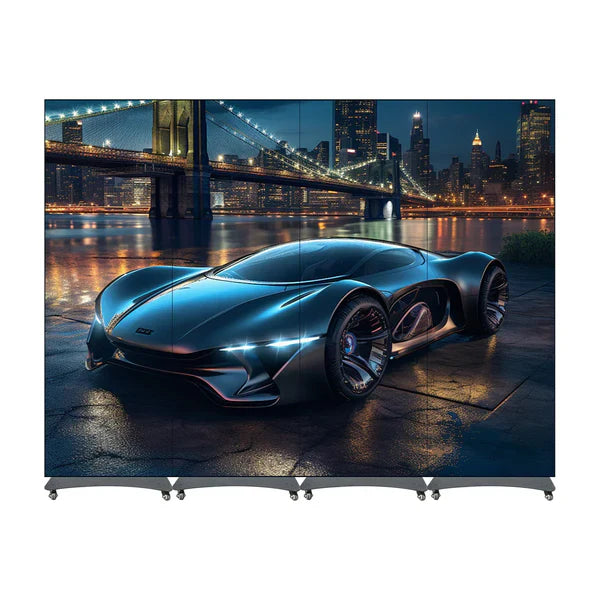
What Is GOB LED Technology and Why Is It Becoming a Standard in Modern LED Poster Displays?
When evaluating LED poster displays, most buyers focus first on resolution, pixel pitch, or screen size. However, in recent years, another technical term has been appearing more frequently in product specifications—GOB, or Glue On Board.
While it may sound like a minor technical upgrade, GOB technology actually represents a significant shift in how LED displays are built and protected, especially in environments where durability and long-term stability are critical.
Understanding GOB: A Protective Layer for LED Modules
At its core, GOB (Glue On Board) is a protective encapsulation process applied directly to the surface of LED modules. In traditional LED displays, individual LED beads are exposed, which allows for efficient heat dissipation but also leaves them vulnerable to external damage.
With GOB technology, a transparent protective resin is applied over the entire module surface. Once cured, this layer forms a smooth, sealed barrier that shields the LED beads without affecting light output or color performance.
This added layer essentially acts as a protective shield, enhancing the physical resilience of the display.
Why Traditional LED Displays Can Be Vulnerable in Real Environments
Although standard LED modules perform well under controlled conditions, real-world environments often introduce variables that can affect their longevity.
In high-traffic commercial spaces, for example, screens may be accidentally touched or bumped. During transportation or installation, even minor impacts can lead to damaged pixels. Over time, dust accumulation or humidity can also affect internal components.
These issues may not be immediately visible, but they can gradually impact display quality and increase maintenance frequency.
How GOB Improves Reliability and Longevity
GOB technology addresses these concerns by reinforcing the surface of the LED module.
One of its most noticeable advantages is improved impact resistance. Because the LED beads are encapsulated, the risk of physical damage from light contact or minor collisions is significantly reduced. This makes the display more suitable for public-facing environments.
Additionally, the sealed surface helps prevent dust and moisture from entering the module, contributing to more stable long-term performance. In environments where cleanliness or humidity control is less predictable, this becomes particularly valuable.
Another subtle benefit is visual consistency. The protective layer can help diffuse light slightly, resulting in a smoother and more uniform appearance across the display.
Why GOB Is Especially Relevant for Poster Displays and Stage Use
LED poster displays are often installed at eye level or within reach, which naturally increases the likelihood of physical interaction. Unlike large-format LED walls that are mounted out of reach, poster displays operate in closer proximity to audiences.
In settings such as churches, stage productions, exhibitions, or retail environments, screens are also frequently assembled, disassembled, or repositioned. This repeated handling introduces additional wear and tear.
GOB technology helps mitigate these risks, making it particularly well-suited for applications where durability, reliability, and reduced maintenance are important considerations.
Exploring GOB LED Poster Display Configurations
If you are considering GOB-based LED poster displays, reviewing different configurations can provide a clearer understanding of how this technology is applied across various use cases—from standalone units to large-scale display walls:
|
Example GOB LED Poster Display Solutions |
|
BP-GOB Series Standard LED Display Poster |
|
BP-GOB Series LED Poster Kit for Church Stage |
|
BP-GOB Series LED Poster Wall 2560×1920mm |
|
BP-GOB Series Large LED Display Wall Solution |
Conclusion
Rather than being just an incremental upgrade, GOB technology represents a practical response to the challenges faced by LED displays in real-world environments. By enhancing durability and reducing exposure to external factors, it allows LED poster displays to maintain consistent performance over time.
For businesses that prioritize long-term reliability and lower maintenance requirements, GOB is increasingly becoming a key feature worth considering.