How to Choose the Right LED Poster Display: A Practical Guide from Pixel Pitch to Application Scenarios
For businesses exploring LED poster displays for the first time, the wide range of specifications and configurations can feel overwhelming. Terms like P1.25, P1.53, P1.86, and P2.5 are often listed prominently, yet their practical implications are not always immediately clear.
In reality, selecting the right LED poster display involves more than comparing specifications—it requires aligning technical parameters with real-world usage scenarios.
Pixel Pitch: The Foundation of Image Clarity
Pixel pitch refers to the distance between individual LED pixels, and it plays a crucial role in determining how sharp and detailed an image appears.
A smaller pixel pitch means that more LEDs are packed into a given area, resulting in higher resolution and finer image quality. This becomes especially noticeable when viewers are positioned close to the screen.
However, the importance of pixel pitch is closely tied to viewing distance. In close-range environments such as retail stores or indoor displays, finer pixel pitches can significantly enhance visual clarity. In contrast, for displays viewed from several meters away, the difference becomes less pronounced.
Choosing the right pixel pitch, therefore, is less about selecting the smallest number and more about matching the display to its intended viewing conditions.
Screen Size and Spatial Considerations
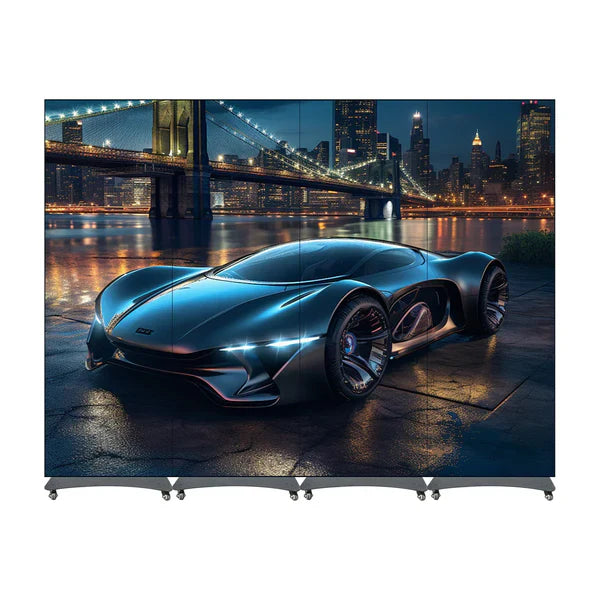
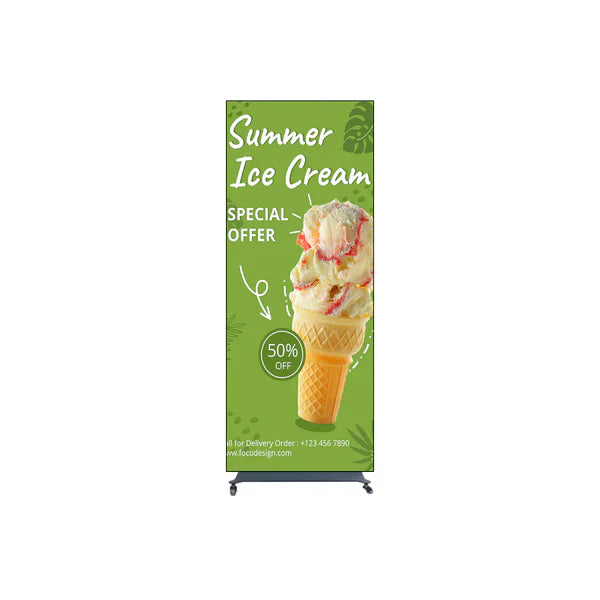
Beyond resolution, screen size has a direct impact on visual presence. LED poster displays are available in a range of sizes, from standard single-unit formats to large-scale spliced display walls.
In compact spaces, a single poster display is often sufficient to deliver clear messaging without overwhelming the environment. In larger venues—such as exhibition halls, event stages, or retail flagships—multiple units can be combined to create a more immersive visual experience.
The key is to consider how the display fits within the physical space, including viewing angles, audience flow, and installation constraints.
Indoor vs. Outdoor Applications
The environment in which the display will be used is another critical factor.
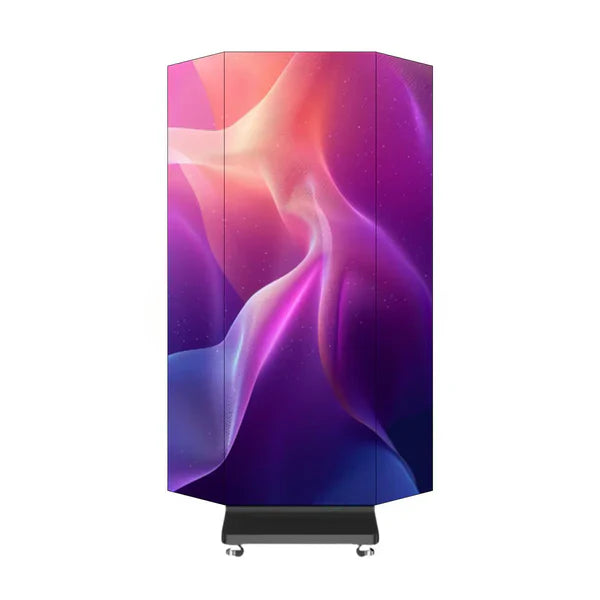
Indoor LED poster displays are typically optimized for image quality and viewer comfort, offering balanced brightness and refined visuals. Outdoor displays, on the other hand, must withstand environmental exposure, including sunlight, rain, and dust.
As a result, outdoor models are designed with higher brightness levels, weather-resistant enclosures, and more robust structural components. These differences make it essential to clearly define the installation environment before making a selection.
Mobility and Deployment Flexibility
In scenarios such as trade shows, pop-up activations, or touring events, mobility becomes just as important as display performance.
Foldable or modular LED poster displays are designed to simplify transportation and setup. Their structures allow for easier packing, quicker assembly, and more efficient relocation between venues.
For organizations that frequently move their displays, investing in a more flexible design can significantly reduce operational complexity over time.
Exploring Different LED Poster Display Options
Once the key selection criteria are clear, reviewing actual product configurations can help translate theory into practical understanding. Different designs—such as foldable units, large-format displays, and outdoor models—illustrate how these concepts are applied in real products:
|
Example LED Poster Display Options |
|
BP-F Series Foldable LED Display Poster |
|
BP-S Series Wide Splicing LED Poster Display (960mm) |
|
BP-OD Series Outdoor LED Poster Display |
Conclusion
Choosing the right LED poster display is not about finding a one-size-fits-all solution, but rather about understanding how different technical factors interact with real-world requirements.
By considering pixel pitch, screen size, environment, and mobility needs together, businesses can identify solutions that not only meet their current needs but also remain adaptable as those needs evolve.