Article: Why LED Sphere Displays Are Becoming the Centerpiece of Modern Visual Spaces
Why LED Sphere Displays Are Becoming the Centerpiece of Modern Visual Spaces
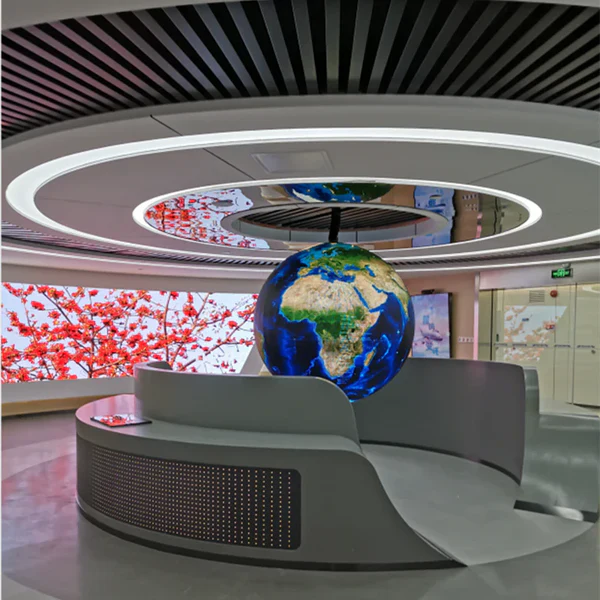
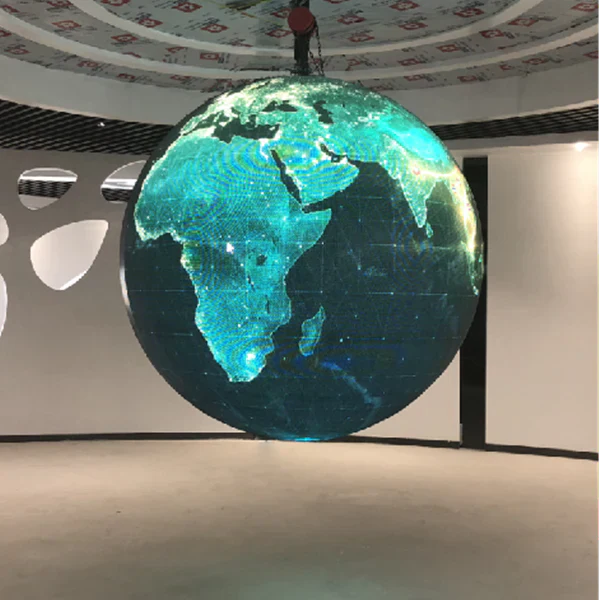
In environments dominated by traditional flat displays, most visual content has been presented on walls or in fixed orientations. While effective, these displays are increasingly perceived as homogeneous and lack a sense of novelty. The LED sphere display changes this dynamic entirely. By wrapping content around a three-dimensional surface, it allows viewers to experience visuals from multiple angles, fundamentally altering how information is perceived. Audiences no longer passively receive content—they can move around the display and engage with it in a more immersive way.
The impact of a sphere goes beyond its shape. Its symmetrical and complete form enables dynamic visuals to flow continuously across the surface, creating a sense of motion and depth. In any commercial or exhibition setting, this form naturally draws attention more effectively than flat screens, making it an ideal centerpiece to define the visual hierarchy of a space.
Why the spherical structure naturally attracts attention
From a visual psychology standpoint, humans are highly sensitive to three-dimensional shapes, especially in spaces dominated by straight lines and rectangular structures. A perfectly shaped sphere immediately stands out, creating a strong visual contrast. When LED content moves dynamically across its surface, the effect is amplified, producing a focal point that captures attention from multiple directions.
Another advantage is the sphere’s ability to be viewed from virtually any angle. Traditional screens have optimal viewing directions, but a spherical display can be recognized and appreciated in 360 degrees. This feature is particularly important in environments with high foot traffic, as it maintains consistent visual appeal regardless of audience movement.
Why it serves as a “spatial centerpiece” rather than just a display
Unlike conventional displays that rely on walls or fixtures, sphere displays function as independent visual elements. They integrate into spatial design rather than being passively inserted into it, making them more akin to a visual installation than a mere display.
In practice, sphere displays are often positioned in entrances, atriums, or key intersections of visitor pathways. Dynamic content can continuously draw attention, encourage exploration, and enhance brand recognition. This dual role—display and spatial guidance—distinguishes it from ordinary screens.
How size influences spatial function
The diameter of a sphere directly affects its visual dominance and coverage area. Smaller spheres are ideal as accent or decorative elements, enhancing the visual interest of a space without overwhelming it. Medium to large spheres, on the other hand, become central visual anchors. Larger spheres not only increase visibility from a distance but also allow for more intricate content, such as dynamic brand animations or immersive visuals, making them suitable for exhibition halls or large retail environments. Choosing the right size requires careful consideration of space, viewing distance, and functional goals.
Explore practical applications across different sizes
The table below shows various sphere sizes and their potential applications:
|
Recommended Use |
Product (Click to View) |
|
Small spaces / Window displays |
|
|
Medium spaces / Retail displays |
|
|
Core visual centerpiece / Commercial spaces |
|
|
Large installations / Exhibition halls |
Conclusion
The LED sphere display elevates the concept of a screen into a spatial visual centerpiece. By combining three-dimensional structure with dynamic content, it not only conveys information but also establishes a strong visual presence in any environment.