How Cube LED Displays Achieve Multi‑Angle Seamless Visual Presentations
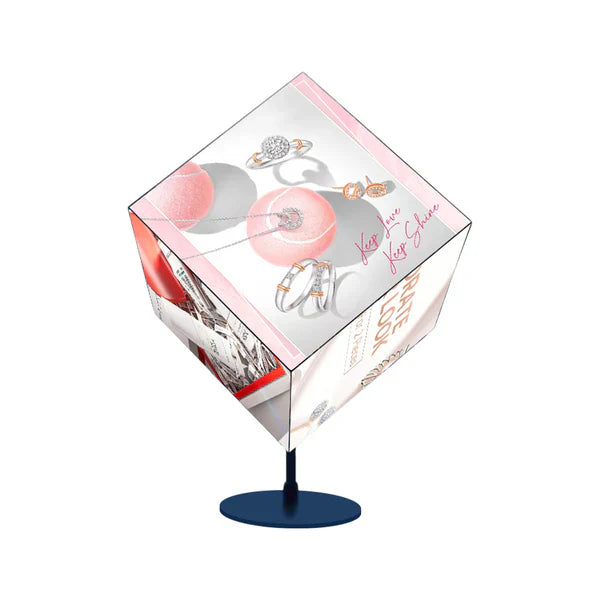
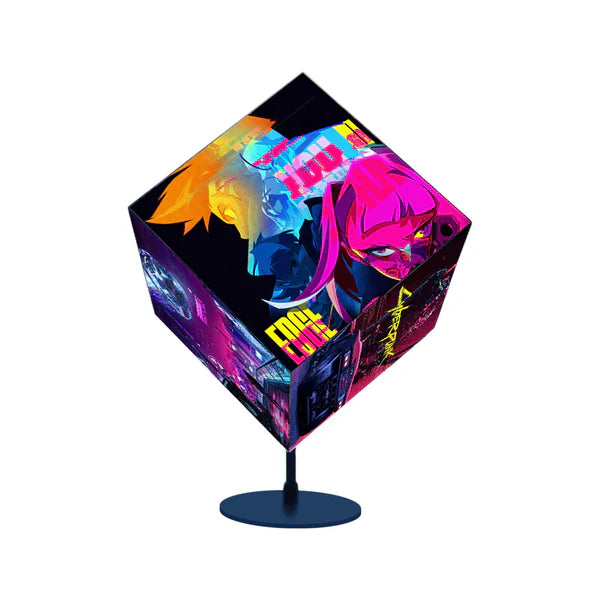
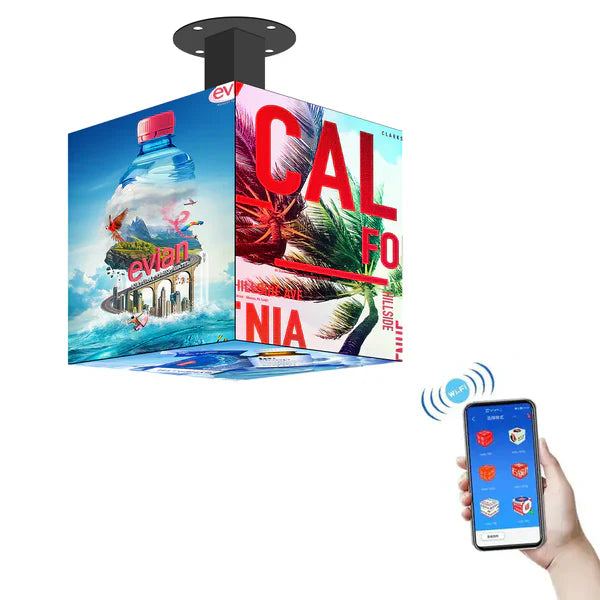
Cube LED displays are visually striking—but behind the vibrant visuals lies a sophisticated blend of engineering, content mapping, and hardware precision. Unlike flat screens, which simply display a single image on a planar surface, cube LED screens are composed of multiple connected faces, each precisely aligned to ensure continuity. This architectural complexity requires careful design and thoughtful execution.
At its core, the success of a cube LED display rests on two essential pillars: physical alignment of the LED modules and intelligent mapping of content that feels seamless across edges and surfaces.
Engineering precision and structural design
Constructing a cube LED display is far more complex than building a standard flat screen. Designers must ensure that each face aligns perfectly with its neighbors so that the cube appears cohesive from every angle. This involves meticulous attention to detail during manufacturing and assembly. Even the slightest deviation in angle or positioning could create visual discontinuities—visible seams, distortions, or misaligned animations—that break the illusion of a unified display surface.
To achieve this, LED cube screens are built with structural reinforcements inside, making sure that each face remains stable and immovable once installed. Internal supports are designed to minimize weight while providing rigidity. For larger cube screens, additional bracing or anchoring may be used, depending on whether the unit is floor‑standing or integrated into a larger installation.
Content mapping across multiple faces
If the hardware is like the skeleton of a cube LED display, content mapping is its brain. Simply playing the same video on each face does not utilize the full potential of a cube. Instead, sophisticated content workflows use algorithms to distribute visual elements across faces in ways that feel intentional and fluid.
For example, a panoramic animation might start on one face, wrap around an edge, and continue onto an adjacent face. This requires converting 2D content into a three‑dimensional layout so that the audience perceives a natural transition. Advanced media servers or content playback systems are often used to manage this transformation, ensuring that animations retain proportion and continuity even as they move across multiple angles.
This capacity for cross‑face visual continuity is what makes cube LED displays far more than simple screen clusters—they become unified storytelling devices capable of complex, engaging content flows.
Pixel pitch and visual consistency
One of the most important choices in cube LED display design is pixel pitch—the physical distance between individual LED pixels. Smaller pixel pitches yield higher image resolution, which is crucial for close‑viewing scenarios like interactive exhibits or retail windows. When people stand near a cube display, they expect crisp detail on each face.
Conversely, larger pixel pitches still perform effectively at viewing distances typical of public spaces, ensuring that content looks smooth and vibrant from afar. The key is choosing the right pixel pitch for the intended environment. In environments where audiences are closer to the cube, tighter pixel pitches will preserve detail and clarity. In larger venues where viewers are farther away, broader pitches deliver striking visuals with less processing demand.
Recommended cube LED configurations by use
|
Application |
Product (Click to View) |
|
High‑precision indoor cube display |
|
|
Balanced indoor exhibit display (P2.5) |
|
|
Outdoor waterproof cube display |
Conclusion
Cube LED displays require a harmonization of engineering accuracy and intelligent content strategy to deliver truly seamless visuals. Their multi‑face structure is not simply an aesthetic choice but a functional opportunity to create visual experiences that unfold in space much like sculptures combine form and meaning. When designed and deployed effectively, cube LED displays transform static content into engaging, continuous narratives that resonate with viewers from every angle.