How Rollable LED Displays Are Transforming Visual Interaction in Indoor Spaces
From Traditional Displays to Flexible LED Screens
In today’s rapidly evolving display technology landscape, LED screens have progressed from fixed, single-size panels to more flexible, shape-adaptable solutions. Traditional LED displays are typically large and permanently installed, ideal for walls or stage backdrops. However, they lack flexibility and convenience in installation. Rollable LED displays were born to address these limitations, offering lightweight, mobile, and bendable capabilities, opening up new possibilities for indoor exhibitions, temporary events, and showroom setups.
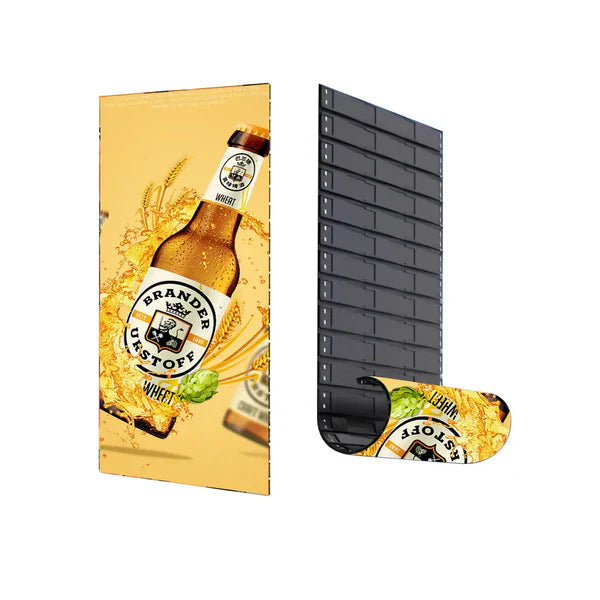
The main advantage of rollable LED screens lies in their flexibility and portability. Unlike rigid displays, which require complicated installation and transport, rollable screens can be stored like a scroll, needing no heavy-duty tools. They are perfect for temporary exhibitions, pop-up events, or rotating showroom displays.
Why Flexible Screens Are More Eye-Catching
From a visual psychology perspective, people are naturally drawn to unconventional shapes. Curved, suspended, or dynamically shaped rollable screens break linear visual boundaries, immediately attracting attention. In exhibitions, brand launches, or experiential spaces, rollable LED screens can be curved, wrapped, or even appear to float, enhancing the immersive experience.
Unlike traditional flat screens, rollable screens allow designers to adapt to the space freely. This freedom elevates the visual rhythm and storytelling possibilities, increasing audience recall and engagement.
Technical Features and Practical Applications
Rollable LED screens utilize lightweight flexible modules that can withstand repeated rolling without damaging display units, thanks to advances in flexible circuit and packaging technology. Multiple pixel pitch options (P2.6 / P1.95 / P1.53 / P1.25) accommodate different resolution needs—from fine-detail graphics to large-scale video content.
Common applications include:
-
Temporary exhibition walls
-
Brand pop-up experience areas
-
Conference or launch event backdrops
-
Performance or stage background screens
In these contexts, the screen becomes more than a display; it is an integral part of the space design.
Choosing the Right Rollable LED Screen for Your Space
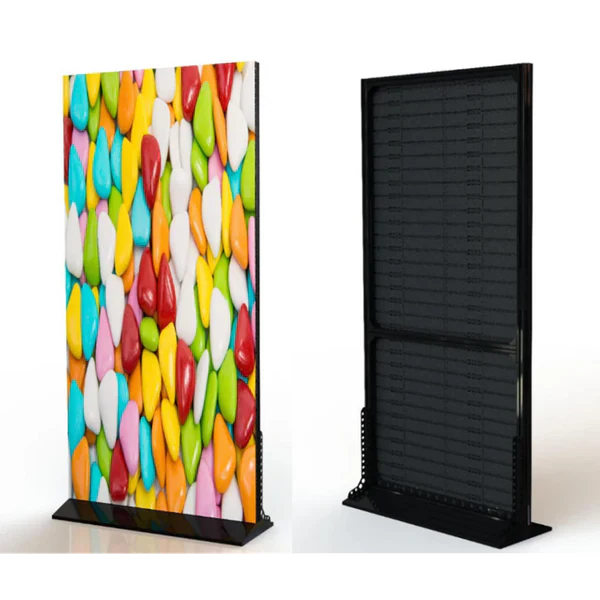
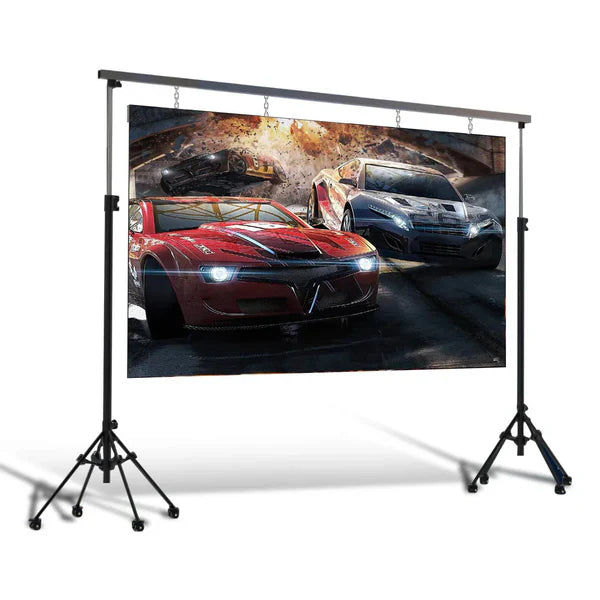
If the display location requires hanging, curving, or wall mounting, lightweight rollable poster screens are ideal. For larger areas or floor-standing setups, rollable screens with detachable frames provide both stability and flexibility:
-
Rollable LED Poster 500–1000 mm (lightweight, supports hanging/magnetic installation)
-
Rollable LED Poster 1000–2000 mm (lightweight, floor-standing with detachable frame)
Conclusion: The Future of Flexible Displays
Rollable LED displays are redefining our expectations of display surfaces. They overcome the limitations of traditional fixed screens while offering innovative solutions for brand storytelling, spatial design, and immersive experiences. As technology continues to mature, these flexible, portable displays will become a staple in commercial, educational, and event spaces.